

Cave Rescue
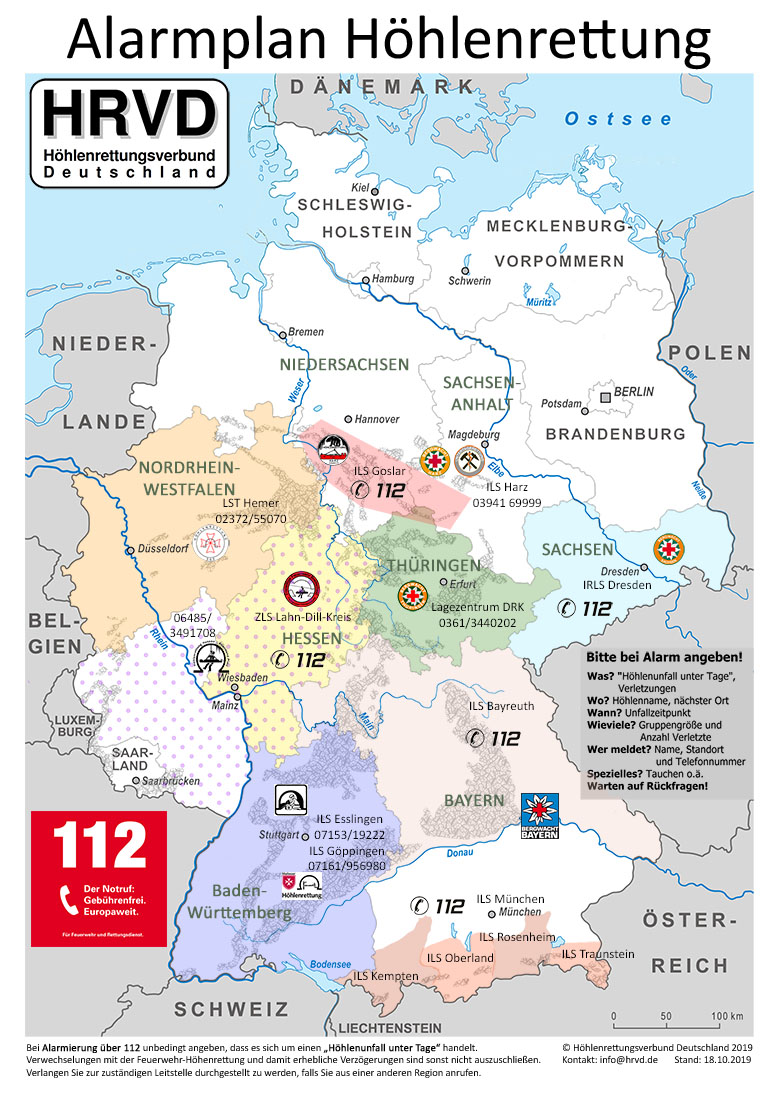
Emergency call: dial the standard emergency number 112
Please gather as much information as possible.
The most important phrase when raising the alarm is "caving accident underground" so that the emergency dispatch centres can respond correctly. In particular, the words "underground" are crucial to avoid confusion with an accident at height.
The following information is helpful when raising the alarm:
What happened?
Are vital functions endangered?
Accident or missing person report?
During what activity did it happen?
When did it happen?
Is there a flood situation?
Where exactly did it happen?
Any sumps?
Name of the cave?
Any vertical pitches?
How far can cars get?
What equipment do the people have?
Route to / in the cave?
Who is reporting?
What injuries?
Stay available for questions.
The Cave Rescue section of VHM e.V. can be reached by e-mail at .
Trip planning
- Group size Ideally, a cave trip should include at least 3-4 people so that in the event of an accident one person can stay with the injured person while 1-2 others can leave the cave to alert the rescue services.
- Alarm contact When planning a cave trip, as much relevant information as possible should be left with a reliable person outside the cave for use in a potential rescue.
- Name of the cave (possibly registry number)
- Section of the cave where the trip takes place
- Alarm time and date
- List of participants
- Cave rescue phone number (see above)
- Alarm time The alarm time must be communicated clearly to the person named above so that they can alert cave rescue if no report has been received by then.
The alarm time should be chosen neither too late nor too early. If it is too tight, even a slightly delayed return from the cave can quickly cause stress and increase the risk of accidents. If it is too generous, waiting for needed rescue may take too long. A possible rule of thumb: 3 hours after the latest planned return time.
Any confusion between the planned return time and the alarm time must be avoided. - Weather forecast In water-bearing caves, the cave's hydrology should be studied as carefully as possible in advance. Even a brief rainfall can make passages impassable, sumps may close, and returning from the cave may become impossible. Detailed information from the weather forecast for the day or days of the planned trip is therefore essential.